
3PL Warehouse Management: The WMS You Do Not Have to Run
Most pages about warehouse management systems are written by software vendors, because most of the people searching are buying software. If you use a 3PL, you are not. The provider runs the system and you get the output. This page covers what 3PL warehouse management is, what the system does, and how running your own WMS compares with using the one your provider already runs. RitePrep runs one warehouse, in Austin, Texas.
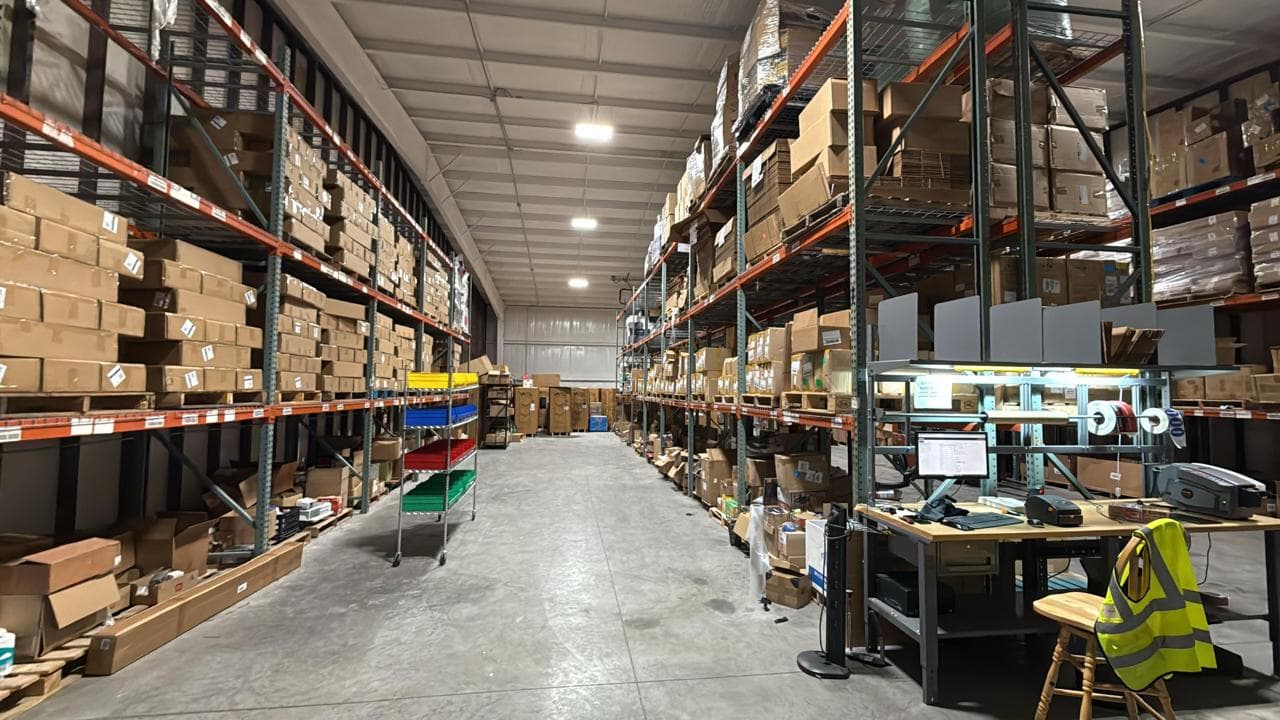
What Is 3PL Warehouse Management?
3PL warehouse management is how a third-party logistics provider tracks and directs the inventory it holds on behalf of its clients. The provider runs the warehouse management system, receives and slots each brand's stock, picks and packs its orders, and reports stock counts and order status back to the brand.
A warehouse management system, or WMS, is the software underneath that. It records what arrived, where every unit was put away, what has been picked, what has been packed, and what has left the building. Without one, a warehouse runs on memory and spreadsheets, and the counts drift a little further from reality every week.
The distinction that matters for a brand is ownership. A WMS is a product you can buy, implement and run yourself. 3PL warehouse management is a service where somebody else has already done that, and what you buy is accurate fulfillment plus a view of your own inventory. They solve the same problem from opposite ends, and they cost money in completely different places.
Do You Need a WMS for Ecommerce?
Only if you are running the warehouse. A brand that stores and ships its own stock eventually needs a real system, because the point where spreadsheets fail is not gradual: you oversell a SKU, refund the customer, and then cannot work out how the count was wrong. Barcodes, bin locations and a transaction log are what stop that repeating.
A brand that uses a 3PL is in a different position. The building already runs on a WMS, and buying a second one to mirror it usually adds reconciliation work rather than removing it. The useful question is not which WMS to buy. It is what your provider's system shows you, how current those numbers are, and what happens to the history if you leave.
The exception is brands that hold stock in more than one place, for example some inventory at a 3PL and some in their own unit or a retail location. Once inventory lives in several systems, something has to sit above them and hold one total. That layer is usually an inventory or order management tool rather than a WMS.
What Makes a 3PL WMS Different From a Standard One
A WMS built for a single company assumes one owner for everything in the building. A 3PL WMS cannot, because one aisle can hold stock belonging to several different brands. So it tracks inventory ownership as well as location, keeps each client's stock and reporting separate, and records the work performed per client so it can be billed.
That multi-client design is also why a 3PL system is less bendable than one you own. Workflows are built to run every account in the building rather than one. You get a system that is already implemented, already staffed and already being used every day, and you give up the ability to reshape it around your own process.
Running Your Own WMS vs Using Your 3PL's
This is the real decision behind the search, and it is not one-sided. Owning the system wins on control and portability. Using your provider's wins on cost and time. Here is where each one actually lands.
| You run your own WMS | You use your 3PL's WMS | |
|---|---|---|
| Who pays for the license | You do, as a subscription or license fee alongside the hardware it needs. | The provider does. The cost sits inside the fulfillment rates you already pay. |
| Who implements it | You, with the vendor or a partner. It is a project with a timeline, not a signup. | Nobody on your side. The system is live and already running other accounts. |
| Who maintains it | Your team: upgrades, user accounts, integrations, and the fixes when one breaks. | The provider. Their floor stops when it stops, so the incentive sits with them. |
| What you can see | Everything in it, down to location and transaction level, because it is yours. | What the provider makes available to clients, typically stock and order status. |
| What you can customize | Pick paths, rules, labels and fields, as far as the software will go. | Little. The workflow has to suit every account in the building, not only yours. |
| If you change provider | Nothing moves. The system is yours and the history stays in it. | Access normally ends with the contract, so agree up front how your data comes out. |
| Who it suits | Brands running their own warehouse, or with process no provider will bend to. | Brands that want the inventory handled rather than the software owned. |
A 3PL's WMS is not a product you are buying, it is the system the building already runs on. That makes the questions different: not which features it has, but what it shows you and how you get your history back.
What Happens Without Real Warehouse Management
Whether the system is yours or your provider's, the failures look the same when there is not one.
Inaccurate counts: manual tracking drifts, causing overselling and stockouts.
No visibility: you cannot see stock levels or order status without asking someone.
Slow, error-prone picking: without system-directed picking, mistakes and delays add up.
No audit trail: when a count is wrong, nothing records when or where it went wrong.
What Our Warehouse Management Gives You
You get the output of a warehouse management system without licensing, implementing or staffing one.
Real-Time Inventory
See current stock levels by SKU at any time, no phone calls.
System-Directed Picking
The system routes pickers efficiently and verifies items to cut errors.
Order and Shipment Status
Track where each order stands from received to shipped.
Low-Stock Alerts
Know what is running low so you can reorder before you sell out.
Reporting
Clear reports on inventory, throughput, and fulfillment performance.
Channel Sync
Your sales channels connect so orders and inventory stay in step.
Warehouse management is the layer underneath the work, not the work itself. The same Austin inventory pool feeds pick and pack and warehousing and storage. If you are deciding what software you still need on top, compare an order management system and read how ecommerce inventory management fits around a 3PL. If the model itself is new to you, start with what a 3PL is.
How Our WMS-Backed Fulfillment Works
Calculate Price
Request a quote for your catalog and volume.
Connect Your Store
We link your sales channels so orders and inventory sync.
Send Your Inventory
Ship your products to our Austin, TX warehouse.
We Receive Into the WMS
Every unit is counted and slotted in the system.
You Get Visibility
Track inventory and orders in real time.
We Fulfill Accurately
System-directed picking keeps orders fast and correct.
Who 3PL Warehouse Management Is Built For
It fits brands that need real inventory control without buying and running the software behind it.
Questions, answered
3PL warehouse management is how a third-party logistics provider tracks and directs the inventory it holds for its clients. The provider runs the warehouse management system, receives and slots each brand's stock, picks and packs its orders, and reports stock counts and order status back to the brand.
Get Warehouse Management Without the Software Project
Skip the license, the implementation and the training. Let our Austin, TX team hold your inventory in a system that is already running.