
A 3PL for Small Business: When to Outsource and What to Ask
A 3PL for a small business takes over the storing, packing, and shipping of your orders so the founder stops being the warehouse. This guide covers the signs you are ready, how in-house fulfillment compares with outsourcing, what each fee on a 3PL quote means at low volume, and what to ask before you sign. RitePrep is one option, running fulfillment from one warehouse in Austin, Texas.

What Is a 3PL for Small Business?
A 3PL for small business is a third-party logistics provider that stores a small brand's inventory and picks, packs, and ships its orders, billing for that work per order and per unit of storage instead of the brand paying rent, staff, and supplies up front. The business keeps selling; the 3PL does the physical fulfillment.
The service itself is the same one a large brand buys: receive stock, store it, pick each order, pack it, hand it to a carrier, and sync tracking back to the store. What changes at small-business size is the economics. Fixed costs such as account minimums and setup fees weigh far more heavily on a small order count than on a large one, so the structure of a quote matters more than the headline pick fee.
The best 3PL for a small business is therefore not a single company. It is the provider whose minimums, fee structure, and way of working fit your volume, your product, and the channels you sell through today, with room for where you expect to be in a year.
Outsourcing fulfillment versus doing it yourself
Outsourcing fulfillment turns a fixed overhead (space, packing staff, supplies, the founder's evenings) into a variable cost that rises and falls with orders. You give up some day-to-day control over how each box goes out, and you gain time, a warehouse that already exists, and carrier rates that a small shipper usually cannot get alone.
Neither choice is permanent. Plenty of brands pack at home for their first stretch, move to a 3PL once packing starts crowding out everything else, and keep a small amount of stock back for samples and local orders.
In-House Fulfillment vs a 3PL for a Small Business
This is the decision behind most small-business 3PL searches. Neither column is right for everyone. The table sets out where each one costs you, so you can see which set of trade-offs fits the stage you are at.
| Fulfilling in-house | Outsourcing to a 3PL | |
|---|---|---|
| Upfront cost | Shelving, a label printer, a scale, and packing supplies. Low at first, rising once you need real space. | Little or no equipment. Some 3PLs charge onboarding or setup fees, so ask. |
| Ongoing cost structure | Mostly fixed: rent, wages, and supplies are paid whether orders come in or not. | Mostly variable: receiving, storage, and a fee per order, plus any monthly minimum. |
| Space | Your spare room, garage, or a lease you sign for. Outgrowing it means moving. | The 3PL's warehouse. You pay for the space your stock actually uses. |
| Labor | You, family, or staff you hire, train, and schedule around order volume. | The 3PL's warehouse team. No hiring, payroll, or cover for sick days. |
| Shipping rates | Whatever rates your volume earns with the carriers on your own account. | Often the 3PL's negotiated rates, which a small shipper may not reach alone. |
| Handling a sales spike | Late nights and missed ship dates during a launch, promotion, or holiday. | Spread across a warehouse team instead of falling on you. Ask how the 3PL staffs for peak periods. |
| Control and customization | Total. Every box, insert, and handwritten note is exactly how you want it. | Agreed in advance as instructions. Custom work is possible but usually billed. |
| Founder's time | Hours every week spent packing, restocking, and queuing at the carrier counter. | Time spent on inventory planning and the 3PL relationship instead of packing. |
The comparison that matters is total cost, not the pick fee alone. Put your real monthly spend on space, supplies, labor (including your own hours), and postage next to a 3PL quote built on the same order numbers.
Signs Your Small Business Is Ready for a 3PL
There is no order count at which every business should switch. Margins, product size, and how much packing you enjoy all move the line. These are the signals that tend to show up first:
Packing orders is taking hours out of every day that should go to selling, product, or customers.
Inventory has taken over the garage, the spare room, or a storage unit, and the next shipment has nowhere to go.
You are about to hire someone whose only job would be packing boxes, with the payroll and scheduling that brings.
Promotions and holidays mean missed ship dates, late nights, or turning off ads because you cannot keep up.
You are adding a channel, such as Amazon or wholesale, that brings prep, labeling, or pallet requirements you have never handled.
Shipping costs are eating margin and your volume alone does not earn better carrier rates.
If two or three of those sound familiar, it is worth getting a quote and comparing it with what fulfillment really costs you now, including your own time.
3PL Fees Explained for a Small Business
Most 3PL quotes are built from the same parts. At small volume, the fixed charges matter most, so this is what each line means and what to ask about it.
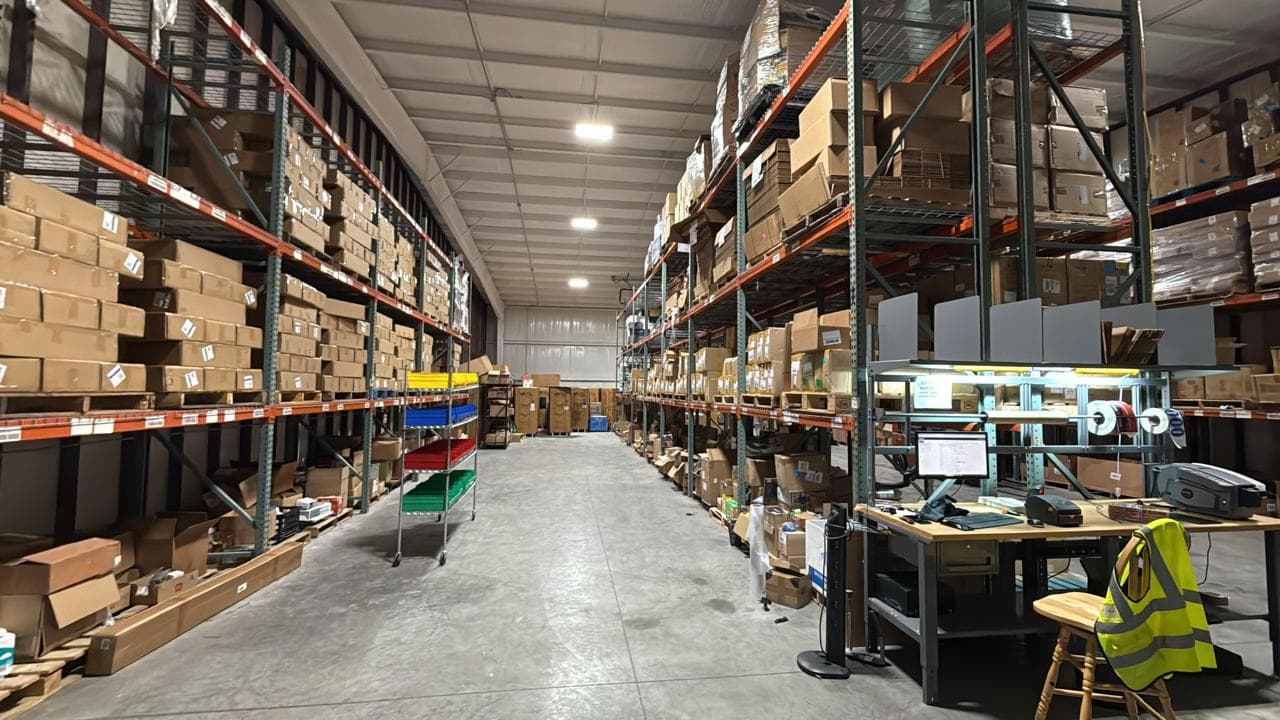
Receiving
Checking in and counting inbound inventory, billed per hour, per unit, per carton, or per shipment. Ask how it is billed, and what happens when a shipment arrives unlabeled or mixed.
Storage
Holding your stock, usually per pallet, shelf, or bin per month. Ask how space is measured and whether you pay for a full pallet position when you only fill half of one.
Pick and pack
Pulling and packing each order, commonly a fee for the first item and a smaller one for each extra. Ask exactly what the fee includes and what counts as an extra.
Packaging
The box, mailer, and void fill, either the 3PL's stock or yours. Ask whether materials are included in the pick fee or billed separately, and whether you can supply branded packaging.
Postage
The carrier charge for each parcel. Ask whether you ship on the 3PL's rates or your own account, and whether the postage on your invoice is marked up.
Account minimums
Some 3PLs charge a monthly minimum whatever your volume. At low volume this can be the largest line on the invoice, so ask whether one applies and how it is calculated.
Onboarding and setup
Some providers charge to set up the account, connect the store, or load SKUs. Ask whether there is a one-off fee and what it covers.
Extras
Kitting, returns, and Amazon FBA prep are usually billed per unit or per project. Ask for these on the quote up front rather than finding them on the first invoice.
For the full breakdown of fee types and pricing models, read our 3PL pricing guide, or get a ballpark from your own numbers with the pricing calculator. For the general selection checklist that applies at any size, see how to choose a 3PL.
How a Small Business Moves to a 3PL
Gather Your Numbers
Monthly orders, units per order, SKU count, product sizes, and roughly how much space your stock takes. These are what a real quote is built on.
Compare Quotes Line by Line
Put each quote into the same structure: receiving, storage, pick and pack, packaging, postage, minimums, and setup. Compare the monthly total, not the headline fee.
Connect Your Store
Orders from your storefront flow to the warehouse automatically and tracking flows back, so nobody retypes an order.
Send Your Inventory
Stock ships to the warehouse, is counted against your packing list, and is put away to recorded locations.
Go Live, Then Watch
Orders start shipping from the 3PL. Watch accuracy, speed, and communication closely for the first few weeks.
Small Businesses a 3PL Usually Suits
Outsourcing fulfillment tends to pay off first for brands that look like this:
Where RitePrep Fits for a Small Business
We are one option among many, and a small operator ourselves. This is what that means for a small brand, including the limits.
The People Who Run the Floor
Onboarding and problems are handled by the operator, not relayed through an account team to a site you have never seen.
Quotes Built on Your Numbers
We do not publish a minimum or a price list. We look at your order volume, SKU count, and storage footprint and tell you honestly whether it makes sense.
One Inventory Across Channels
DTC orders, Amazon FBA prep, and wholesale run from the same building, so adding a channel does not mean adding a second vendor.
A Central Origin
Every order ships from our Austin warehouse, near the middle of the country, which keeps the average ground move to a nationwide customer base shorter than it would be from either coast.
The Honest Limit
We run one warehouse. If your customers sit heavily on one coast, or you need stock split across regions, a multi-node network may serve you better, and we will say so.
When Staying In-House Is the Better Call
Outsourcing is not always the right move for a small business. Keep fulfilling yourself for now if:
Revisit the decision when the signs above start to show. Getting a quote early costs nothing and tells you where the line is for your numbers.
Questions a Small Business Should Ask a 3PL
The general selection checklist applies at any size. These questions are the ones that matter most when your volume is small:
Ask every provider the same questions and put the answers side by side. A clear answer is a good sign in itself.
Questions, answered
There is no single best 3PL for every small business. The right one is the provider whose minimums, fee structure, location, and channel support fit your volume and products today. Compare quotes on total monthly cost at your real order numbers, check whether a monthly minimum applies, and confirm the provider handles every channel you sell through.
See What Outsourcing Would Cost Your Business
Send us your order volume, SKU count, and roughly how much space your stock needs. You will get a quote built on those numbers and a straight answer on whether outsourcing makes sense yet.