
What a Texas 3PL Is and Why the Origin State Matters
Every parcel you ship is priced and routed by how far it travels from the warehouse it left. That makes the state your inventory sits in a cost decision, not a detail. RitePrep runs one warehouse, in Austin, Texas, and ships from that central origin to customers across the country.
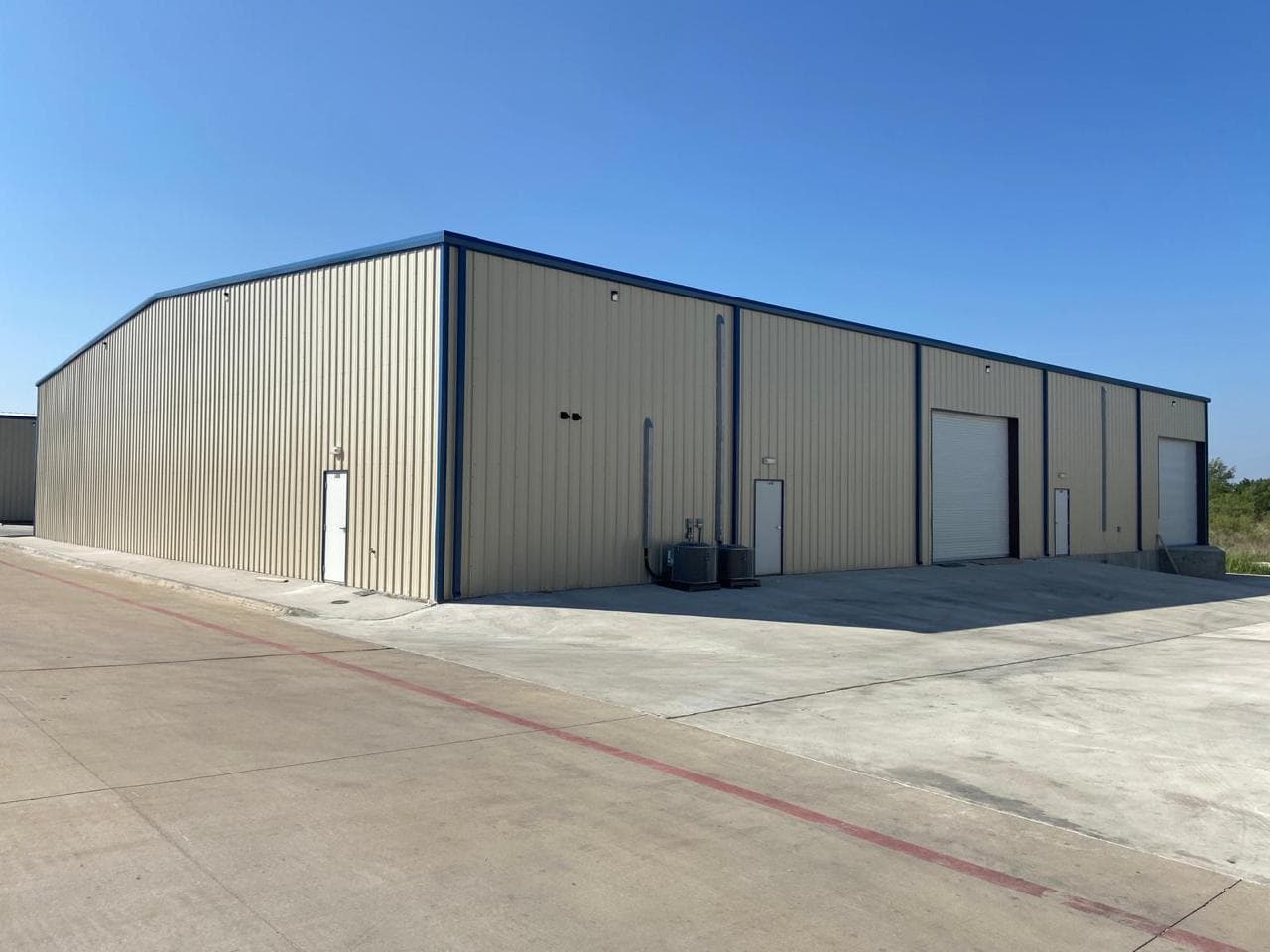
What Is a Texas 3PL?
A Texas 3PL is a third-party logistics provider that stores a brand's inventory in a Texas warehouse and picks, packs, and ships its orders from there. Because Texas sits near the middle of the country, parcels leaving it reach the far coast in a lower zone than they would from a warehouse on the opposite coast, although a coastal warehouse will still beat it on its own coast.
The work itself is the same work any third-party logistics provider does: receive inbound stock, store it, pick and pack orders as they come in, hand parcels to a carrier, and process returns. What the state changes is the distance every one of those parcels then has to travel.
That matters because domestic ground shipping is priced by distance band, not by mile. A warehouse in California is close to Los Angeles and far from New York. A warehouse in New Jersey is the reverse. A warehouse in central Texas is never at either extreme, which is the entire argument for putting inventory here.
How Shipping Zones Work
Carriers convert the distance between an origin and a destination into a zone number, and then price the shipment against that number. USPS publishes its domestic zones as distance bands measured from the origin: Zone 1 covers roughly the first 50 miles, Zone 4 covers 301 to 600 miles, Zone 7 covers 1,401 to 1,800 miles, and Zone 8 covers 1,801 miles and beyond. UPS and FedEx publish their own ground zone charts per origin ZIP code, and their zones do not match USPS.
A higher zone generally means both a higher rate and more days in transit, because the parcel is physically travelling further through more of the carrier's network. Zone count is therefore the single lever a fulfillment location gives you, and it is the reason two brands paying the same published rate card can end up with very different shipping bills.
Zones are calculated from ZIP codes against each carrier's own chart, not from road mileage, and no 3PL sets them. Any provider quoting you a fixed number of transit days as a guarantee is describing a carrier service level it does not control.
Where Our Texas Warehouse Is
RitePrep operates one warehouse and it is in Austin, Texas. Not a network, not a set of partner nodes in other states, and not a virtual address. Everything on this page describes orders shipping out of that one building.
This page is about the origin argument: when shipping from central Texas beats shipping from a coast for a brand selling nationally, and when it does not. If what you want instead is the building itself, who works there, what it handles day to day, and how to check that a provider claiming an Austin address really operates one, that is all on our Austin 3PL page.
Central Texas vs a Coastal Origin
The clearest way to see why origin state matters is to line up the same destination metros against three different starting points, using the official USPS zone for each pair. A coastal warehouse is very close to its own coast and very far from the other one. A central Texas warehouse is moderately far from everywhere. Its average zone is only a little lower than either coast's; what it removes is the top zone.
| Destination metro | From Austin, TX | From Los Angeles, CA | From Newark, NJ |
|---|---|---|---|
| Los Angeles | Zone 6 | Zone 1 | Zone 8 |
| Seattle | Zone 7 | Zone 5 | Zone 8 |
| Denver | Zone 5 | Zone 5 | Zone 7 |
| Chicago | Zone 5 | Zone 7 | Zone 5 |
| Atlanta | Zone 5 | Zone 8 | Zone 5 |
| Miami | Zone 6 | Zone 8 | Zone 6 |
| New York | Zone 7 | Zone 8 | Zone 1 |
| Average zone, all 24 metros | 5.67 | 5.96 | 5.79 |
| Metros in Zone 8, of 24 | 0 | 8 | 8 |
| Worst zone | Zone 7 | Zone 8 | Zone 8 |
USPS zones only, from the USPS Domestic Zone Chart effective September 1, 2026, using origin 3-digit ZIP Codes 787, 900, 070, with the USPS * and + markers removed. The last three rows cover all 24 major metros on our shipping zones from Austin page, which has the full table and method. UPS and FedEx publish their own zone charts, which differ. Nothing in this table is a rate or a transit time commitment.
What a Coastal Warehouse Costs You on the Far Coast
Most 3PLs a growing brand looks at first are on a coast, because that is where imports land. That works well for the side of the country nearest the building and badly for the other side.
A West Coast origin puts every East Coast order in a high zone, and an East Coast origin does the same thing in reverse.
Ground rates rise with the zone, so an identical parcel costs different amounts based only on where it shipped from.
Transit days climb with the zone too, which means your slowest deliveries are always to the customers furthest from your origin.
Splitting inventory across two coasts fixes the zone problem but doubles receiving, safety stock, and reconciliation work.
Running two nodes at low volume usually costs more in duplicated storage and stranded stock than it saves in postage.
A single central origin is the version of this trade most brands can actually run. You give up the very lowest zone into one coast and you stop paying the worst zone into the other.
What We Run From the Texas Warehouse
A Texas address is only worth anything if the operation inside the building is solid. Here is what your inventory is actually handled with once it lands in Austin.
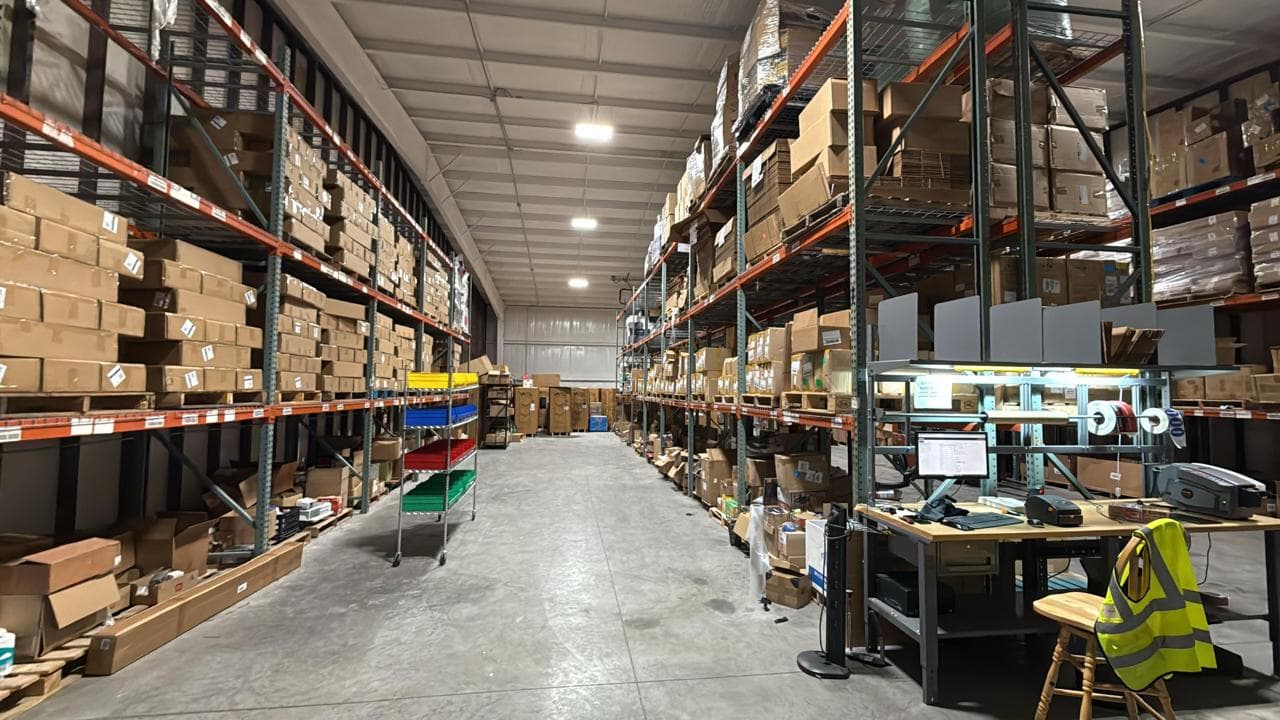
Receiving Into One Stock Pool
Inbound containers, pallets, and parcel shipments are counted in and put away against a single inventory record, so your stored stock reads the same number no matter which channel is drawing on it.
Pick and Pack for Parcel Orders
Orders are picked, checked, and packed for carrier handoff. This is the same operation behind our DTC fulfillment work, run out of the same building.
Cases and Pallets for Wholesale
Retail and distributor orders are built to the buyer's routing guide rather than packed like a consumer parcel. See B2B fulfillment for how those orders differ.
Amazon Prep Before Replenishment Goes Out
Labeling and prep to Amazon's requirements happen here, so a rejected shipment is caught before it leaves. FBA prep runs from the same stock as your own orders.
Lot and Expiry Handling for Consumables
Food, beverage, supplement, and personal care stock is rotated by date rather than by whichever pallet is nearest. That is covered on our CPG fulfillment page.
Returns Back Into Sellable Stock
Returned units are inspected and either restocked or set aside, instead of piling up in a corner. See returns management.
If you are still working out what a third-party logistics provider does at all, start with what is a 3PL. If you already know and you are comparing providers, our guide to choosing a 3PL and the 3PL pricing breakdown are the two worth reading before you take a quote.
Moving Inventory to a Texas 3PL
1. Quote Against Your Real Numbers
Send us your SKU count, order volume, average parcel size, and where your customers are. You can also ballpark it yourself first with the pricing calculator.
2. Connect Your Store
Your sales channels are connected so orders arrive without anyone rekeying them, and inventory counts flow back the other way.
3. Ship Inventory to Austin
Send stock in by parcel, pallet, or container. It is counted in against your purchase order and put away before it goes live to sell.
4. Go Live and Watch the Numbers
Start with one channel or a portion of your catalogue if you would rather not move everything at once, then widen it when the accuracy and timing hold up.
Who a Texas 3PL Actually Suits
Origin state is a bigger lever for some brands than others. It matters most when your customers are spread out and your parcels are light enough that zone, rather than weight, drives the rate.
Why Brands Pick RitePrep in Texas
We have been running fulfillment since 2020. What follows is what we are, and just as importantly what we are not.
One Building, and We Run It Ourselves
Your inventory sits in our Austin warehouse, not in an unnamed partner facility booked on your behalf. The building itself is covered on our Austin 3PL page.
A Central Origin, Not a Coastal One
Everything ships from the middle of the country. The USPS zones behind that, including where a coast still wins, are on our shipping zones from Austin page.
One Inventory Across Every Channel
Wholesale, storefront, and marketplace orders draw down the same count, which is what omnichannel fulfillment has to mean to be worth anything.
You Talk to People Who Touch the Stock
Questions go to the team running your account rather than into a shared ticket queue.
We Are Clear About What We Are Not
We are not a licensed customs broker, we do not place cargo insurance, and we hold no motor carrier or broker authority. Where we help with international freight it is as your fulfillment partner working alongside the licensed parties, not in place of them.
A 3PL that tells you where its limits are before you sign is easier to plan around than one that finds them afterwards.
One Texas Warehouse vs Splitting Across Two Coasts
Two-node distribution is the standard advice once a brand grows, and it does lower zones. It also introduces a set of costs that are easy to miss when you are only comparing postage:
A central origin is worth testing before a second node, because it lowers the worst zones without any of the above. Two nodes make sense when volume is high enough that the postage saving clears the duplicated cost, and that is a number worth calculating rather than assuming.
How to Work Out Whether a Texas Origin Helps Your Orders
This is answerable from your own data, and it should be, because nobody's sales page can answer it for you. The exercise takes an afternoon:
If the two origins come out close, your orders are probably clustered near your current warehouse and you should stay where you are. Send us the order file and we will run the comparison with you either way.
Serving Texas Brands From Austin
Alongside the national argument, some Texas businesses simply want their stock within driving distance. From Austin, the rest of the Texas Triangle is close:
We do not operate warehouses in Dallas, Houston, or San Antonio. We serve brands in those cities from Austin, and we would rather say that plainly than imply a presence we do not have.
One Warehouse, in Austin, Texas
No network, no partner nodes, no borrowed addresses
Almost every problem a brand has with a 3PL traces back to not knowing where its inventory physically is or who is handling it. We keep that simple by only having one answer.
Questions, answered
A Texas 3PL is a third-party logistics provider that stores a brand's inventory in a Texas warehouse and picks, packs, and ships its orders from there. Because Texas sits near the middle of the country, parcels leaving it reach the far coast in a lower zone than they would from a warehouse on the opposite coast, although a coastal warehouse will still beat it on its own coast.
Move Your Inventory to the Middle of the Country
Send us your order history and where your customers are, and we will tell you honestly whether a Texas origin helps your numbers or not.