
International Freight That Lands In Your Fulfillment Warehouse
Most brands run freight and fulfillment as two disconnected vendors, then spend the gap chasing containers and reconciling counts. RitePrep moves your cargo from your supplier in China and lands it in the same Austin warehouse that picks, packs and preps your orders. One inventory pool, one team, one point of contact.
What Is Transloading?
Transloading is the transfer of freight from one mode of transport to another without placing it into long-term storage. An arriving ocean container or rail car is unloaded at a dock, its contents are re-sorted, consolidated or palletized, and the shipment continues inland by truck or rail.
Three other terms describe pieces of the same job. Devanning, also called container unloading or destuffing, is the physical work of emptying the container. Cross docking is what happens when the goods coming off that container already have outbound orders waiting, so they cross the dock to an outbound truck instead of going into a storage location.
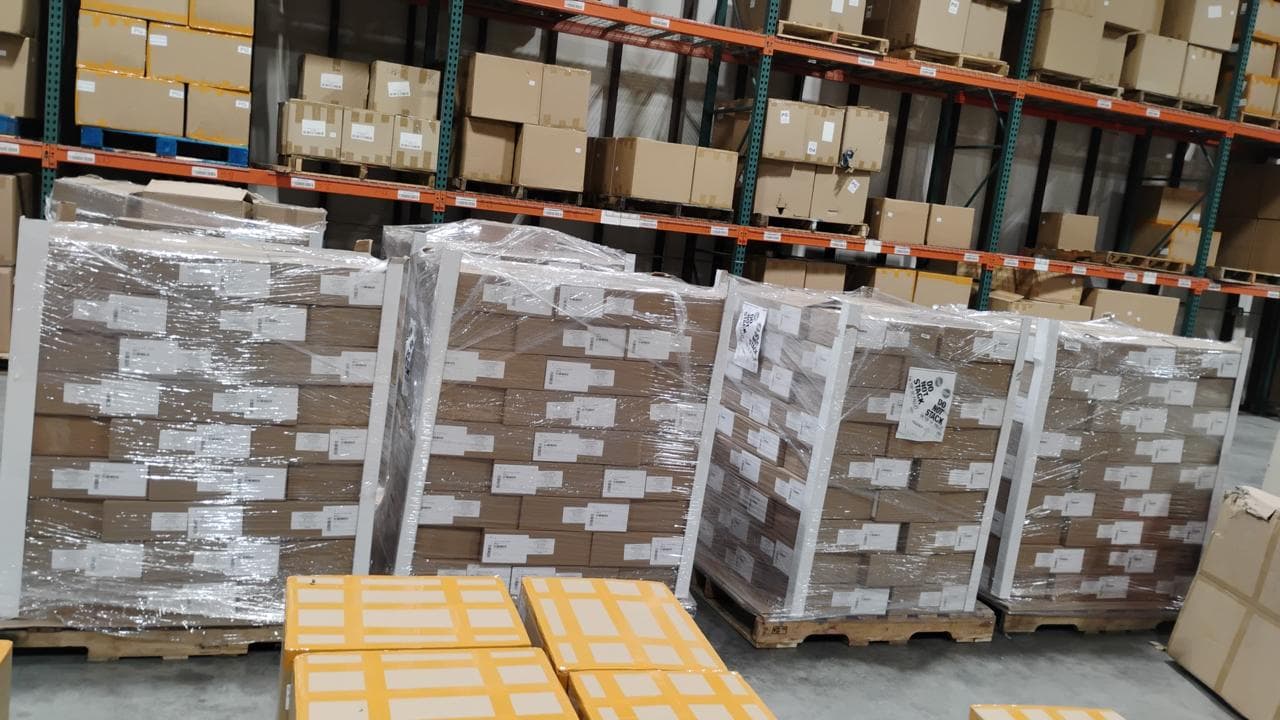
At RitePrep this is one continuous operation rather than four separate services. An import container is drayed to our Austin, Texas warehouse and devanned at our own dock, counted and inspected, then broken down into whatever the outbound leg needs: pallets for an LTL carrier, cartons for a retail purchase order, or individual parcels picked and packed for online orders. Nothing has to move to a second building to change form.
The distinction is worth getting right before you price the work, because a transload and a storage program are billed against completely different things. The table below sets the four side by side. If the goods do need to be held rather than moved straight through, that becomes warehousing and storage, and anything heading to Amazon can go into FBA prep in the same building.
Transloading vs Cross Docking vs Devanning vs Warehousing
These four get used as if they were the same service, and the differences are real: whether the goods enter inventory at all, how long they sit, whether the shipping unit changes, and what set the job off in the first place.
| Transloading | Cross docking | Devanning | Warehousing | |
|---|---|---|---|---|
| In one line | Freight changes vehicle or mode, then carries on to its destination. | Inbound freight is re-sorted onto outbound trucks across the same dock. | The physical work of emptying an ocean container. | Goods are received into stock and held until something calls for them. |
| Usual trigger | A container load has to become road freight. | Outbound orders already exist for the goods on the inbound truck. | A sealed container reaches the dock and has to be emptied. | Stock has arrived ahead of the demand for it. |
| Enters inventory? | No. It is a transfer, not a receipt into stock. | No. Goods are matched to outbound orders instead. | It depends what happens next. Devanning is only the unloading step. | Yes. Received, counted, put away and tracked by location. |
| How long it dwells | Short. The freight is meant to keep moving. | Very short. Ideally it never leaves the dock area. | As long as emptying the container takes. | Open-ended, until orders pull the stock back out. |
| Shipping unit changes? | Yes. A container load becomes pallets, LTL freight or parcels. | Usually. Inbound loads are re-mixed into outbound ones. | Yes. Floor-loaded or loose cargo comes off as cartons or pallets. | Yes, but later, at pick and pack time rather than on arrival. |
| Where it happens | A dock near a port, rail head or border crossing. | A dock built for flow-through, with inbound and outbound doors. | Any dock that can take a container, including a warehouse dock. | A storage building with racking and a location system. |
| Also called | Transload, transloading services | Cross dock, flow-through | Container unloading, destuffing, stripping | Storage, inventory storage |
The terms overlap in practice. A single import container arriving at our Austin dock is devanned, transloaded and, when the outbound orders are already open, cross docked as one continuous piece of work rather than as separate jobs.
Every mode, coordinated by one team
Freight is quoted and booked around what your inventory actually needs, not around whichever mode is easiest to sell you.
Ocean Freight (FCL)
A full container booked end to end when your volume fills it. Lower cost per unit and fewer touches, with the container moving direct to our warehouse for devanning.
Ocean Freight (LCL)
Less than container load for volumes that do not justify a full box. Your cargo is consolidated with other shippers, so you pay for the space you actually use.
Air Freight
For launches, restocks and anything where a stockout costs more than the freight. Priced on chargeable weight, so we help you decide when it is genuinely worth it.
Import & Customs Coordination
We prepare and chase the paperwork: commercial invoice, packing list, bill of lading, and the data your customs broker needs for the ISF and the entry. The licensed broker files, we keep the timeline moving.
Cargo Cover Coordination
Carrier liability is capped and requires proving fault. We coordinate cargo cover for the declared value of the goods through the freight partner and their underwriter, including General Average exposure. RitePrep does not place the policy itself.
Inventory Inspection
Goods checked on arrival at our Austin warehouse before they enter your sellable stock, so defects are caught before they reach a customer or an Amazon receiving dock.
Where we ship from and to
China is the origin for most of the brands we work with. If your lane is not listed, ask, because coverage extends beyond these four corridors.
ChinaUSA
Our core lane, landing into Austin, Texas
ChinaEurope
Ocean and air into major EU gateways
ChinaGCC
Gulf destinations including the UAE
ChinaAustralia
Ocean and air to Australian ports
Supplier to sellable stock
Quote and book
We look at your cargo, volume, timing and Incoterm, then quote the lane. You see the origin, main carriage and destination charges separately, not one blended number.
Origin pickup and export
Cargo is collected from your supplier, consolidated if it is LCL, and cleared for export with the documents prepared up front.
Main carriage
The shipment sails or flies on the booked service. You get milestone updates rather than having to chase the forwarder for a status.
Customs and delivery
Entry is filed and duties settled, then the container is drayed to our Austin warehouse and unloaded.
Inspect, receive, fulfill
We count and inspect the goods, put them into stock, and they become available for DTC, retail or Amazon FBA prep from the same building.
The handoff is where imports go wrong
When the forwarder and the warehouse are different companies, nobody owns the seam. Counts get disputed, damaged cartons get argued about, and a delayed container turns into a stockout nobody flagged.
Running both through RitePrep removes that seam. The team that books the container is the team that receives it, counts it and ships the orders. New to the model? Start with what is a 3PL or read what freight forwarding actually involves.
What that gets you
- One inventory pool for DTC, retail and Amazon, from the moment the container is unloaded
- Goods inspected before they enter sellable stock, not after a customer complains
- Amazon FBA prep and FNSKU labeling done in the same building the container lands in
- One contact for the freight and the fulfillment, so nothing falls between vendors
International freight is delivered together with our freight partner Eleevate Logistics. You deal with RitePrep, and the freight execution sits with a specialist team.
Frequently Asked Questions
Yes. China to the USA is our core lane, covering ocean FCL, ocean LCL and air freight, landing into our Austin, Texas warehouse. We also coordinate China to Europe, the GCC and Australia through our freight partner.
Get a Freight Quote
Send us your lane, your cargo and your timing. You will get an itemized quote with origin, main carriage and destination charges shown separately, not one blended number.