
Ecommerce Inventory Management, Explained
Wrong stock numbers cost you both ways: you oversell and cancel, or you sit on cash you cannot find. This page covers how ecommerce inventory management works, the metrics worth tracking and how to calculate each one, and the common methods. RitePrep keeps inventory accurate in real time from one warehouse in Austin, Texas.

What Is Ecommerce Inventory Management?
Ecommerce inventory management is the process of tracking how much of each product an online store has, where it is stored, and when to reorder it, then keeping those counts in sync with every sales channel. Good inventory management for ecommerce prevents overselling and stockouts while keeping cash out of stock that is not selling.
The hard part is not counting. It is keeping one number true while it changes all day: orders reduce it, receipts add to it, returns put some of it back, and damaged units take some of it away. Every channel that sells from the same stock needs to see the same number, fast enough that two customers cannot buy the last unit.
How Inventory Management for Ecommerce Works
It starts at receiving. Inbound stock is counted against the purchase order or packing list, and each unit is recorded by SKU, and by lot and expiration date where that matters. Put-away then assigns every unit a known location, so the system knows where it is as well as how much there is.
From there the count moves with every event. An order reserves units and a pick removes them. A return adds sellable units back or writes damaged ones off. The available quantity is pushed to each connected sales channel so a storefront and a marketplace do not both sell the same unit.
The last piece is planning. Sales velocity and supplier lead times decide when to reorder and how much buffer to hold, and regular counts check that the record still matches the shelf. When they drift apart, the count is corrected and the cause is found, whether that is a receiving error, a mis-pick, or shrinkage.
Common Inventory Management Methods
FIFO (first in, first out) ships the oldest stock first. FEFO (first expired, first out) ships whatever expires soonest, which is the rule for food, supplements, and cosmetics with dated lots. Both are about which unit leaves, not how many you hold.
ABC analysis ranks SKUs by their share of sales or value. The small group of A items gets the tightest reorder points and the most frequent counts, while slow C items are checked less often. Just-in-time ordering keeps stock deliberately thin and relies on short, dependable supplier lead times, which is efficient when it works and painful when a supplier slips.
Cycle counting checks a rotating slice of SKUs on a schedule instead of shutting down for one full physical count a year. It catches drift while it is small and while the cause is still traceable.
Spreadsheet, Inventory Software, or a 3PL?
A spreadsheet works while one person ships from one location and sells on one channel. It breaks when a second channel is added, because nothing updates the sheet the moment an order lands.
Inventory or order management software keeps the record and syncs channels automatically, but the count is only as good as the people receiving, picking, and counting the physical stock.
A 3PL holds the stock and the record together. The team that receives and ships the units is also the team whose scans update the count, which removes the gap between what the system says and what someone remembered to type in.
Ecommerce Inventory Metrics and How to Calculate Them
Six numbers cover most inventory decisions for an online store. Each has a widely used formula. Use the same period and the same valuation (units or cost) on both sides of every calculation.
| Metric | What it measures | How it is calculated | What it tells you |
|---|---|---|---|
| Reorder point | The stock level at which the next purchase order should go out. | (Average daily units sold × supplier lead time in days) + safety stock | When to reorder so new stock arrives before the shelf is empty. |
| Safety stock | Extra units held to absorb demand spikes and late deliveries. | (Max daily sales × max lead time) minus (average daily sales × average lead time) | How much buffer protects you from variability, and what it costs to hold. |
| Inventory turnover | How many times inventory is sold and replaced during a period. | Cost of goods sold ÷ average inventory value at cost, for the same period | Whether stock is moving or sitting. Low turnover means cash is tied up. |
| Days on hand | How many days of sales the average inventory level would cover. | (Average inventory value ÷ cost of goods sold) × days in the period | How long cash sits on the shelf before it turns back into a sale. |
| Sell-through rate | The share of stock received that actually sold in a period. | (Units sold ÷ units received) × 100, for the same period | Which SKUs are moving and which are drifting toward dead stock. |
| Stockout rate | How often demand arrives for a product you do not have. | (Orders that could not ship from stock ÷ total orders) × 100 | How often empty shelves cost sales, and whether reorder points are too low. |
Average inventory is usually (opening inventory + closing inventory) ÷ 2. Days on hand over a year is the same as 365 ÷ annual turnover. The safety stock formula shown is the simple max-minus-average method; larger catalogs often use a statistical version based on a target service level and the standard deviation of demand. Some retailers calculate sell-through against opening inventory instead of units received. Stockout rate is also tracked per SKU, as the share of SKUs out of stock on a given day. There is no universal healthy value for any of these: a good turnover for fast-moving consumables would be alarming for furniture, so compare against your own history and category.
What Bad Inventory Data Costs You
Inaccurate counts quietly damage both revenue and reputation.
Overselling: selling stock you do not have means cancellations and unhappy customers.
Stockouts: running out of a bestseller without warning means lost sales.
Dead stock: cash trapped in products you cannot see or locate.
What's Included in Our Inventory Management
We keep your counts accurate and visible so you can make confident decisions.
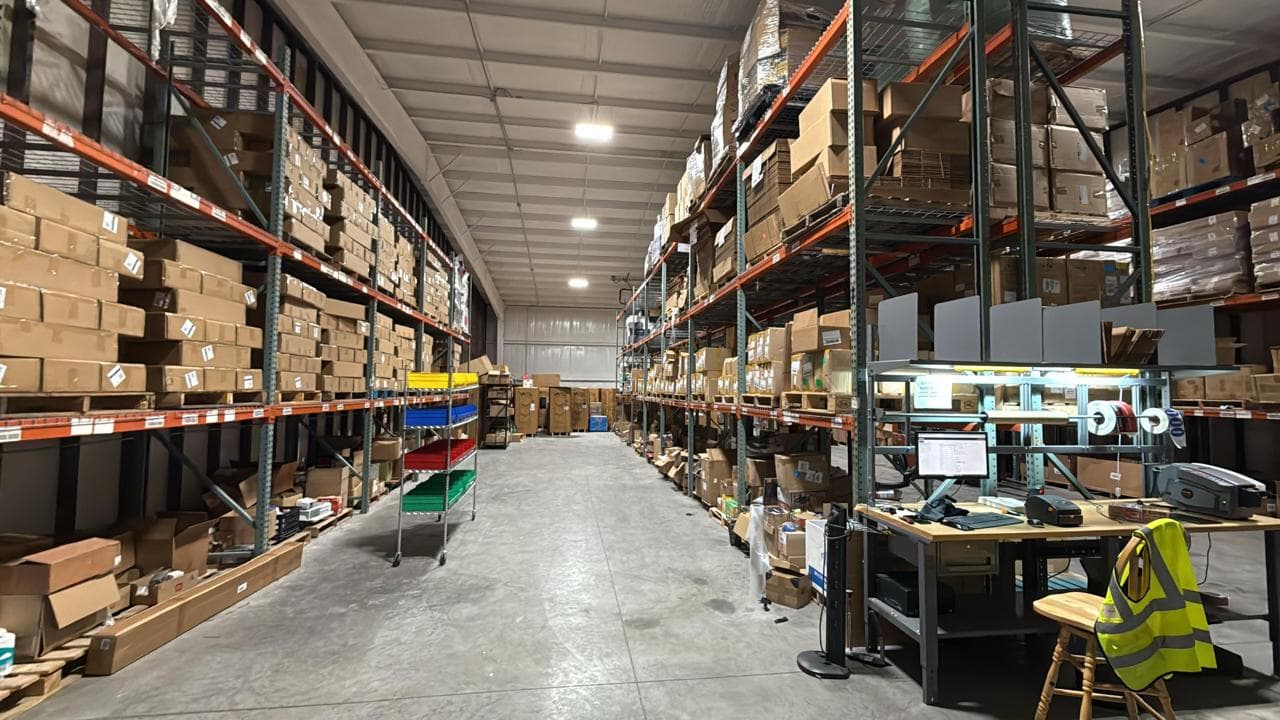
Real-Time SKU Counts
See exactly how much of each product is on hand at any moment.
Channel Sync
Inventory updates across your connected channels so you never oversell.
Low-Stock Alerts
Get notified before a product runs out so you can reorder in time.
Cycle Counts
Regular counts keep the system and the shelf in agreement.
Lot and Expiration Tracking
First-expired-first-out handling for CPG, food, and supplement brands.
Inventory management is the record behind everything else we do. The same Austin stock feeds pick and pack, omnichannel orders, and CPG fulfillment with lot control. For the systems side, see our guides to the warehouse management system and the order management system, and read what a backorder is if you sell past zero on purpose. Deciding how much to buy and when is a separate job, covered by our inventory planning service. Storage costs are covered in warehousing and storage and our 3PL pricing guide.
How Our Inventory Management Works
Calculate Price
Request a quote for your SKUs and volume.
Connect Your Store
We sync your sales channels to our system.
Send Your Inventory
Ship your products to our Austin, TX warehouse.
We Receive and Count
Every unit is counted and logged by SKU and lot.
You Get Visibility
Track real-time counts and low-stock alerts.
We Keep It Accurate
Cycle counts and sync keep your numbers true.
Who Our Inventory Management Is Built For
It fits brands where inventory accuracy has become critical.
Questions, answered
It is the process of tracking how much of each product an online store has, where it is stored, and when to reorder it, and keeping those counts in sync with every sales channel so the business does not oversell, run out, or tie up cash in stock that is not selling.
Get Accurate Inventory Today
Stop guessing at your stock. Let our Austin, TX team keep your ecommerce inventory accurate and visible in real time.