Keeping costs under control while satisfying customers with prompt delivery are two of the biggest demands of running an e-commerce business today. However, when shipping costs rise or delivery times slow down, your entire operation feels the impact. Consider this scenario: you’ve recently launched a new product, and while orders are steadily increasing, the cost of printing shipping labels is quietly eating into your profit margins with every shipment. Nothing seems to reduce shipping expenses without causing delays, even after switching carriers, adjusting packaging, or offering free shipping. For most online retailers, this is a familiar challenge.
Finding the right balance between reducing delivery costs, maintaining speed, and ensuring a reliable, seamless customer experience is the real challenge. High shipping rates can easily drive customers away, while slower delivery can damage your brand reputation. Therefore, achieving lower shipping costs, optimizing fulfillment, and choosing smart e-commerce shipping strategies are essential for sustainable growth. When done right, these strategies can lead to 20% – 30% savings, significantly boost profitability, and improve customer acquisition.
Whether you run a small online store or a growing e-commerce business, you can apply the proven strategies discussed in this article. From packaging optimizations to carrier negotiations, every step can make a measurable difference.
What makes the shipping rates high?
Before addressing solutions for high shipping rates, it is important to understand their root causes. Identifying gaps and oversights helps in planning a smart e-commerce strategy and effectively reducing postage cost.
1. Oversized or Improper Packaging:
Oversized or larger-than-necessary boxes increase the dimensional (DIM) weight of a package. Shipping carriers calculate costs based on a package’s volume (L×W×H) ÷ DIMfactor rather than its actual weight. As a result, unused space directly adds to shipping expenses, driving rates higher.
2. Long Distances and Order Returns:
Shipping across states or internationally is more expensive due to longer distances and higher shipping zones. The farther a package travels, the more carriers charge. International shipments also involve customs duties and taxes, which further raise costs. Additionally, order returns often require double shipping, significantly increasing overall expenses.
3. Economic Imbalances:
The broader economic environment directly impacts shipping costs. Fuel surcharges, transportation expenses, border restrictions, customs handling, and tax policies all contribute to rising shipping rates. These factors increase the shipping cost-to-sale ratio, ultimately affecting the average order value (AOV).
4. Lack of Negotiated Rates:
Small businesses often pay premium retail rates because they lack negotiated contracts with e-commerce carriers. Without volume discounts or incentive-based pricing, shipping costs naturally remain high. For instance, Amazon Prime members benefit from faster and often discounted shipping, whereas non-members typically receive standard delivery at higher costs.
5. Inefficient Fulfillment Locations:
Distance is not the only concern, the location of your warehouse or fulfillment center also plays a major role in shipping costs. If fulfillment centers are far from your primary customer base, packages must travel across multiple zones. Poor fulfillment placement increases both delivery time and shipping expenses.
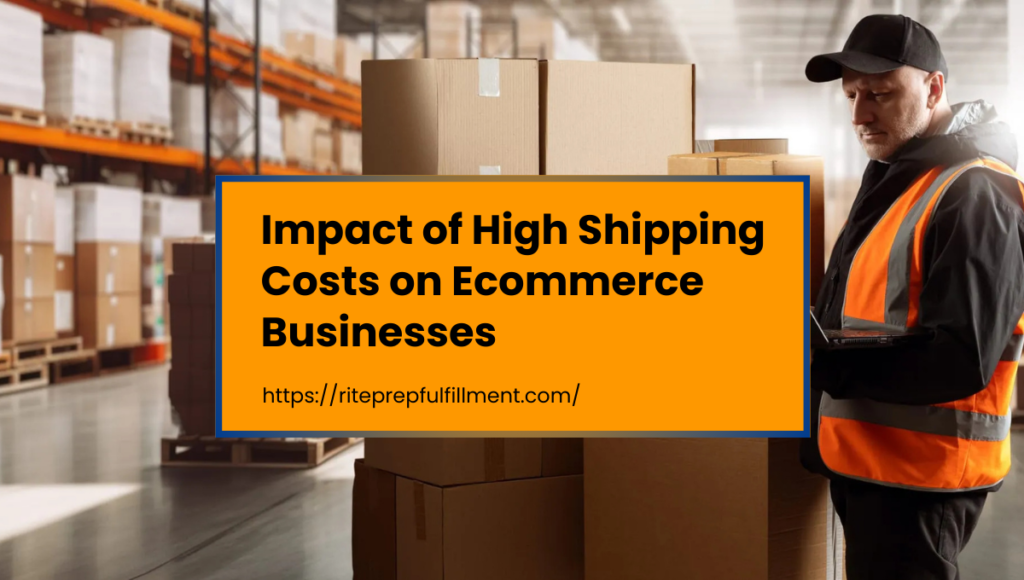
How High Shipping Costs Affect Your Ecommerce Businesses?
While product pricing is based on cost and value, customer acquisition is heavily influenced by shipping charges. Studies show that nearly 60% of shoppers abandon their carts due to additional costs, primarily high shipping fees. Furthermore, 49% of consumers cite shipping costs as the main reason for abandoning a purchase, a phenomenon known as cart abandonment.
From a business perspective, rising shipping rates directly erode profit margins. Absorbing these costs to remain competitive reduces earnings per order, while passing them on to customers risks losing sales. Either way, revenue is negatively impacted.
E-commerce is a highly competitive space, where even a slight increase in shipping rates can push customers toward cheaper and faster alternatives, even if your product quality is superior. This not only affects sales but also damages brand perception. Small fluctuations in shipping costs can have a disproportionately large impact on customer trust and brand loyalty, increasing pressure to find cost-effective shipping solutions.
Ultimately, high shipping costs can limit your ability to scale. They are not just a financial burden but a critical factor influencing customer behavior, brand sustainability, and long-term trust.
Ways to Lower Shipping Costs without Slowing Delivery:
1) Negotiate Better Rates with Carriers:
If you ship frequently, you may be eligible for discounted business rates. Most carriers offer lower pricing based on shipment volume, frequency, or long-term commitments. By leveraging data from your shipping history, you can negotiate more favorable and predictable rates.
Additionally, long-term subscriptions to premium carrier plans, such as Amazon’s fulfillment or membership programs, not only reduce shipping costs but also speed up delivery times.
2) Optimize Packaging Materials and Dimensions:
Switch to right-sized packaging using lightweight materials, such as poly mailers instead of boxes, to minimize shipping costs. Smaller packages move faster through carrier networks, helping maintain delivery speed. Traditional boxes can often be replaced with alternatives like corrugated plastic, padded mailers, or air pillows to reduce both weight and volume.
3) Leverage Several Carriers Instead of Sticking to One:
Many e-commerce businesses stick to a single carrier out of habit. However, different carriers offer better rates depending on package size, weight, and destination. By using multiple carriers, or shipping software that compares rates, you can consistently choose the fastest and most cost-effective option. You can also explore hybrid shipping (multimodal delivery), which combines different transportation methods to secure better pricing.
4) Locating Fulfillment Centers Closer to Your Customers:
Shipping zones play a critical role in cost and delivery time. When warehouses are far from customers, packages travel across multiple zones, increasing both transit time and expenses. Using strategically located fulfillment centers or third-party logistics providers (3PLs) can significantly reduce shipping costs while improving delivery speed.
5) Order Consolidation or Increasing AOV:
Bundling products is a smart way to reduce shipping costs. Offering multipacks, bundles, or combo deals encourages customers to purchase more items in a single order rather than placing multiple shipments. This lowers per-unit shipping costs and improves overall efficiency.
Many platforms also offer free shipping above a certain order value (e.g., free shipping over $49). Setting a similar threshold can increase AOV while enabling single-shipment fulfillment, further reducing shipping expenses.
6) Using Shipping Automation Tools:
Shipping automation tools allow you to set rules for selecting the fastest routes, the most cost-effective carriers, and optimal packaging options. This ensures every order is shipped using the most efficient method while reducing manual errors and processing time.
Tools like ShipStation integrate with major marketplaces and carriers to automatically generate shipping labels and send tracking updates to customers. Other popular options include Shippo, Easyship, and Sendcloud.
7) Ensure Local Delivery or Pickup Options
For nearby customers, local delivery or in-store pickup can eliminate shipping costs altogether. This reduces reliance on carriers and significantly improves delivery speed. By enabling geolocation-based options, customers can collect their orders from a designated location instead of waiting days for nearby deliveries. Services like DoorDash and FedEx are commonly used for local delivery solutions.
8) Using 3PLs – Outsourcing:
Third-party logistics providers (3PLs) often secure discounted carrier rates due to high shipping volumes. As a result, shipping through a 3PL is typically more cost-effective than managing fulfillment independently. Beyond cost savings, 3PLs offer several additional benefits, which will be explored in detail below.
Ready to Ship Smarter? Implement These Strategies Today.
The Use of 3PLs – Cost-Saving Benefits:
Considering the problems faced by businesses in shipping, partnering with a Third-Party Logistics provider (3PL) offers ecommerce businesses far more than just cheaper shipping. It’s a strategic move that helps streamline operations, improve customer satisfaction, and support long-term scalability.
Below, we will compare how 3PLs fixes the common problems.
| Shipping Problem | How a 3PL helps them |
| High shipping costs due to retail carrier rates | 3PLs negotiate bulk discounts with major carriers, giving you access to lower rates you wouldn’t get on your own. |
| Oversized packaging leading to DIM weight charges | 3PLs optimize packaging, use right-sized boxes and reduce DIM weight penalties. |
| Limited capacity during peak seasons | 3PLs have the staff, space and systems to manage high-volume periods without delays. |
| High overhead costs from running your own warehouse | You eliminate rent, labor, equipment, and utilities. Only pay for the storage and services you actually use. |
| Time wasted managing shipping instead of growing the business | 3PLs handle fulfillment end-to-end, allowing you to focus on marketing, sales and customer experience. |
Tools and Software That Help Minimize Shipping Costs:
Using the right shipping equipment and software can significantly reduce expenses while improving operational efficiency. These technologies save both time and money by automating repetitive tasks, comparing carrier rates, optimizing packaging choices, and ensuring accurate deliveries. Here’s how they help:
- Real-time rate comparison tools (e.g., ShipStation, Easyship, Sendcloud)
- Automated label printing and batch processing
- Address validation and error prevention
- Inventory and order management integration (Shopify, WooCommerce, Amazon, etc.)
- Packaging optimization features
- Tracking and customer notification tools
Reducing shipping costs without sacrificing delivery speed is not only possible, it’s a competitive advantage waiting to be leveraged. By optimizing packaging, choosing smarter carrier options, utilizing technology, and staying flexible with fulfillment strategies, businesses can significantly lower costs while maintaining high customer satisfaction.
The key is consistency. Monitor industry trends, review your logistics strategy regularly, and adapt as your business scales. By balancing speed with cost efficiency, you can protect profit margins and build long-term customer loyalty. Start implementing these strategies today, and watch your shipping operations become faster, smarter, and more efficient.
FAQs:
How can I reduce shipping costs without compromising delivery speed?
You can lower shipping costs by optimizing packaging, comparing carrier rates, using regional fulfillment centers, and automating order processing. These strategies help eliminate unnecessary expenses while maintaining fast delivery times.
Does switching carriers really make a difference in cost?
Yes. Different carriers offer varying rates based on distance, weight, and service type. Regularly comparing carrier options ensures you select the most cost-effective solution without sacrificing delivery speed.
How does packaging affect shipping costs?
Oversized or unnecessary packaging increases dimensional weight, which leads to higher fees. Using right-sized, lightweight packaging keeps shipments efficient and reduces overall shipping costs.
Can automation help speed up deliveries and reduce costs?
Absolutely. Automated label printing, real-time tracking, and streamlined order management reduce manual errors and fulfillment time, resulting in lower operational costs and faster deliveries.
Are bulk shipping discounts worth it for small businesses?
Yes. Even small businesses can benefit from volume-based discounts by negotiating with carriers or partnering with third-party logistics providers that offer aggregated shipping rates.
Also Read: What Is CPG Fulfillment?