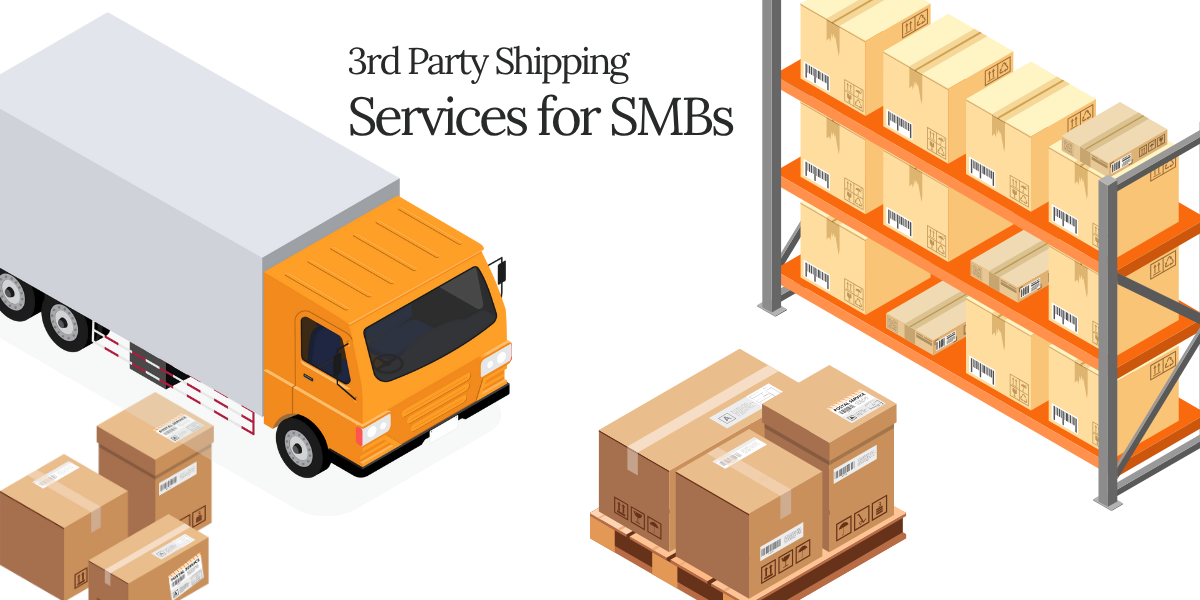
3rd party shipping is also called 3PL, which means you have outsourced your entire fulfillment process (from warehousing to shipping) to external experts. You hire a 3rd party shipper or 3PL provider to store inventory, pick & pack orders, and arrange delivery on your behalf instead of handling logistics in-house, which lets you focus on product development and marketing. In practice, a 3PL partner becomes your logistics team because they receive your goods, manage inventory, and ship orders to customers.
For example, ShipBob explained that in “3PL distribution, your 3PL partner handles all logistics services involved in distribution, including…picking, packing, shipping, and returns”. Choosing a 3rd party fulfillment solution means you pay for only the logistics services you need, and a good 3PL will use technology (like a warehouse management system) to keep you informed about your stock and shipments at all times.
Also Read: Top 10 Amazon FBA Prep Centers in the USA
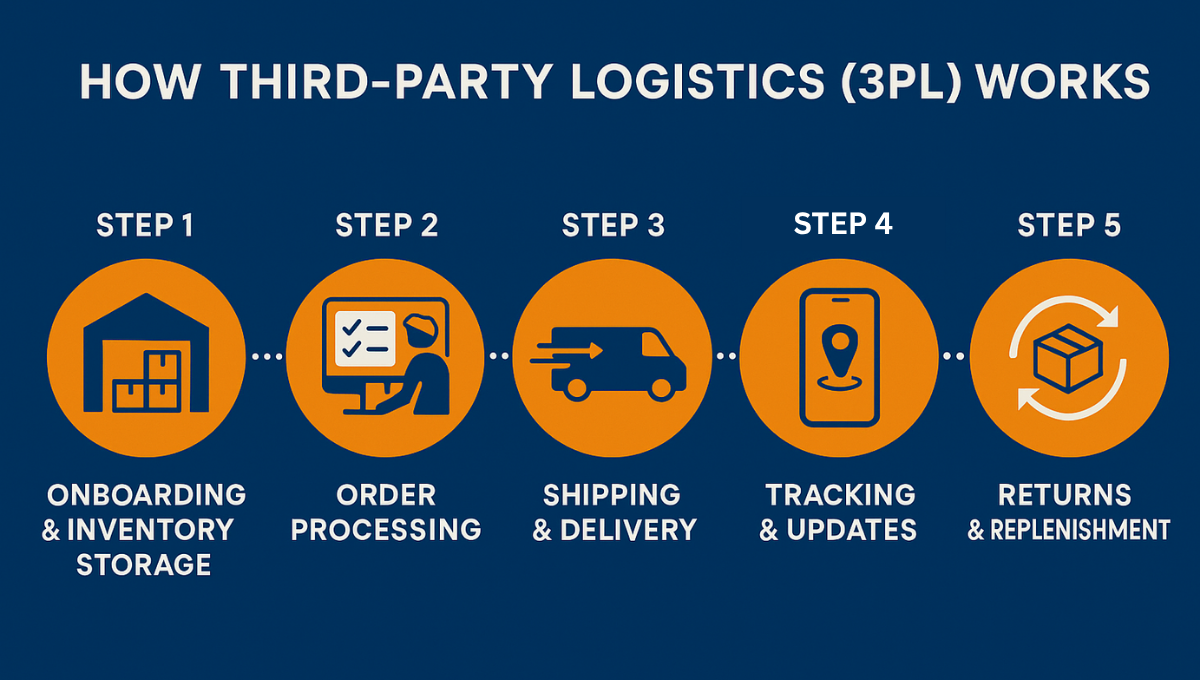
How Third-Party Logistics (3PL) Works
When you engage a 3rd party fulfillment provider, the process typically follows these steps:
Step 1: Onboard & Store Inventory
You agree on services with a 3PL and ship your products to their warehouse. The provider takes receipt of your goods and stores them in secure fulfillment centers.
Step 2: Order Processing
When a customer places an order on your website or Amazon store, the order details are sent to the 3PL’s system. The warehouse staff then pick and pack the ordered items.
Step 3: Shipping & Delivery
The 3PL chooses the best shipping method and carrier for the order (ground, air, etc.) and sends the package to the customer. They handle the handoff to carriers like UPS, FedEx or USPS.
Step 4: Tracking & Updates
Throughout the process, you and the customer get real-time tracking and updates via the 3PL’s platform. This transparency helps you monitor order status and inventory levels.
Step 5: Returns & Replenishment
If a customer returns a product, the 3PL can also manage returns processing – inspecting the item, restocking it, and refunding as needed. Some 3PLs even handle reverse logistics to save you headaches.
This outsourcing model means you don’t need your own warehouse, delivery trucks, or staff. For example, RitePrep’s fulfillment platform integrates with 150+ sales channels so orders flow automatically from your store to the warehouse. By sending inventory to the 3PL and relying on their staff and systems, you avoid the large capital investment of building a warehouse and fleet. Instead, the 3PL uses its own resources to fulfill orders on your behalf.
Also Read: Top 3PL Warehouse Inventory Management Services
Key Benefits of Using a 3rd Party Fulfillment Provider
Outsourcing to a 3rd party logistics fulfillment solution offers many advantages for small and mid-size e-commerce businesses:
Cost Savings
3PLs use shared warehouses and bulk shipping contracts, passing along lower costs. Shippo notes that partnering with a 3PL gives you “bulk shipping rates” and saves on rent, staff and equipment. In other words, you only pay for the space and labor you use.
Time Savings & Focus
By offloading picking, packing, shipping and returns, you free up countless hours. As one RitePrep guide explains, a 3PL “eliminates time-consuming logistics tasks,” letting you concentrate on product development, marketing and customer service.
Scalability
A top 3rd party fulfillment solution can quickly scale up during peak seasons. 3PLs operate networks of fulfillment centers, so you can simply send more inventory to them during holidays or sales spikes. No need to hire temporary staff or lease new space.
Faster Shipping
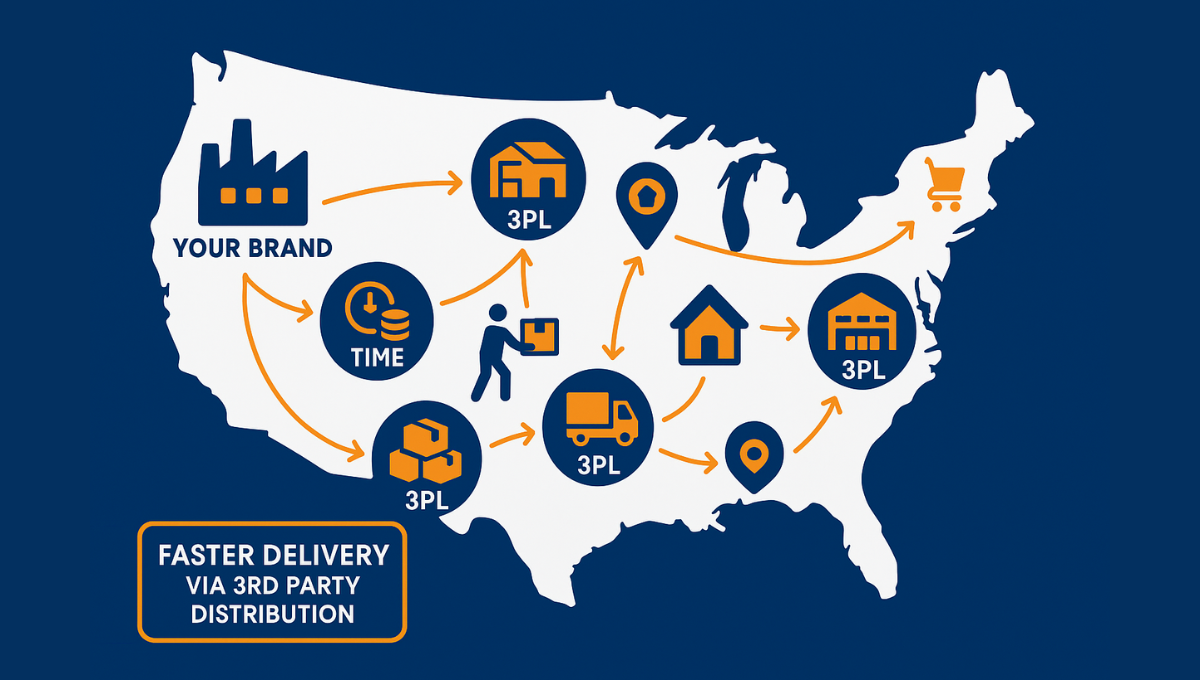
With multiple warehouses, 3PLs shorten transit zones. RitePrep points out that placing products “closer to your customers” can slash lead times – one merchant cut shipping from 3 weeks to 3 days by using distributed 3PL warehouses. Faster delivery boosts customer satisfaction and loyalty.
Expertise & Technology
3PL providers are specialists with advanced systems. They use sophisticated 3rd party fulfillment software for inventory and order management. For example, 3PLs often offer real-time dashboards that sync with your online store, so you always know stock levels. Their expertise leads to high accuracy (often ~99%) and fewer mistakes in fulfillment.
Global Reach
Many 3PLs have international networks. For brands selling cross-border, 3PLs can store inventory in overseas warehouses to avoid customs headaches. A U.S. brand, for instance, might use a Canadian warehouse to dramatically cut shipping costs and delivery times to Canada. This “international 3rd party distribution” allows you to expand globally more easily.
Risk Reduction
3PL companies often handle carrier issues, insurance and compliance. They can absorb some liabilities (like covering lost goods) that you’d otherwise face alone. By spreading shipments across carriers and hubs, they also offer backup options if one channel faces delays.
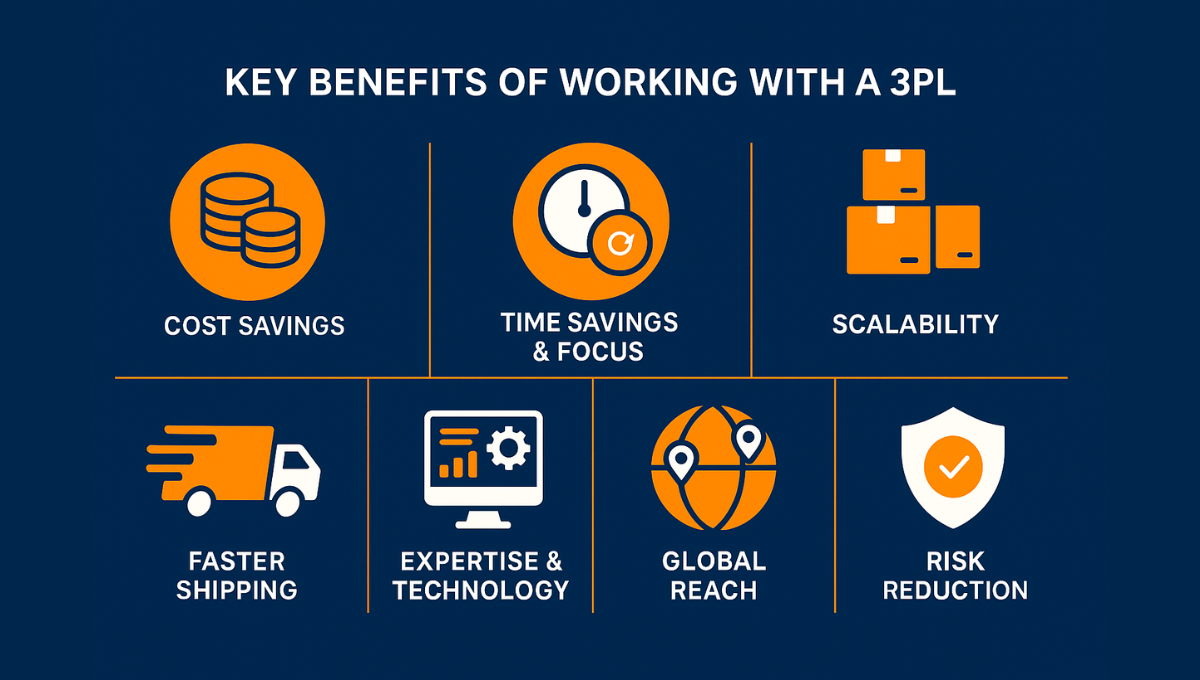
In short, the right third-party logistics partner improves efficiency and customer experience, as RitePrep’s Amazon FBA 3PL guide explains: 81% of shippers see better customer service when using a 3PL. The expert handling of fulfillment frees you to focus on growing your brand.
What 3PL Companies Do (Third-Party Shipping Services)
Third-party logistics providers offer a broad range of 3rd party shipping services covering every step of order fulfillment. Typical 3PL services include:
Shipping & Receiving
Coordinating shipments to and from your suppliers and customers. The 3PL arranges incoming freight and handles outgoing packages with carriers.
Warehousing & Storage
Storing your products in secure facilities (fulfillment centers). These are the 3rd party logistics fulfillment warehouses where your inventory lives. For example, Shippo notes that 3PLs provide “warehousing and storage” and even specialized packaging or kitting services.
Inventory Management
Tracking stock levels across all locations. A 3PL’s warehouse software updates your inventory automatically, preventing stockouts. Many 3PLs provide dashboards or integrate with your store so you see inventory data live.
Pick & Pack
Selecting items for each order (picking) and packing them properly for shipment. This often includes kitting and bundling if needed. As Shippo explains, 3PLs handle “picking and packing customer orders”.
Custom Packaging & Labeling
Ensuring packages meet carrier and brand standards. Some 3PLs (like RitePrep) specialize in Amazon FBA prep, labeling, bundling, or poly-bagging products per Amazon’s requirements. They can also customize packaging or include marketing inserts.
Shipping to Customers
Working with carriers (UPS, FedEx, etc.) to deliver orders. 3PLs choose the best carrier and service level for each shipment. RitePrep, for instance, partners with major carriers to offer fast, compliant shipping.
Returns & Reverse Logistics
Processing customer returns and exchanges. Instead of leaving returns to you, the 3PL can inspect returned items, restock them if sellable, and issue refunds or replacements. This complete reverse logistics support saves you time and effort.

In other words, a good 3PL handles virtually every logistics task. As DHL’s glossary notes, a third-party logistics provider “offers outsourced logistics services such as warehouse management and freight transportation”. When you sign up with a 3PL, these services are bundled into the solution, so you get a one-stop fulfillment partner.
Also Read: Fulfillment & Shipping: A Complete E-commerce Guide
3rd Party Distribution and Warehousing
Example of a 3rd party warehouse: Products are stored in fulfillment centers where staff pick and pack orders for customers. In a 3rd party distribution and warehousing setup, your products are sent to the 3PL’s fulfillment centers instead of your own facility. The 3PL then handles storage, order processing, and shipping. ShipBob explains that in 3PL distribution “your 3PL partner handles all logistics services…including picking, packing, shipping, and returns”.
In practice, 3PL companies like RitePrep maintain multiple warehouses nationwide. By distributing inventory, you ship from locations “closer to your customers.” For example, RitePrep notes that using a distributed network “shortens shipping zones and transit times,” helping one merchant cut delivery lead times from 3 weeks to 3 days.
Relying on third-party warehouses means you avoid leasing your own storage space. Instead, you pay the 3PL for the warehouse space and labor you use. For instance, RitePrep’s Warehousing 3PL Explained shows how using 3PL network hubs can slash shipping times and costs.
In addition to domestic warehouses, some 3PLs offer overseas storage. Placing inventory in a Canadian or European fulfillment center can eliminate import fees and speed up international deliveries. Overall, third-party distribution and warehousing make your fulfillment network far more flexible and efficient.
Fulfillment Models Comparison
| Fulfillment Option | Overview | Key Differences |
| In-House Logistics (1PL) | You manage your own warehouse(s), staff, and shipping. You buy vehicles, hire pickers, and lease space. | Full control: You oversee every step, but you also bear all costs and complexity. Scaling requires a big investment. |
| 3rd Party Shipping (3PL) | You outsource warehousing and shipping to a logistics provider. They use their own facilities and carriers. | Efficiency & Scale: Fast to scale up/down, with lower up-front costs. 3PL experts handle inventory, packing, and carrier negotiations. |
| Dropshipping | Products ship directly from the manufacturer to your customer. You never handle inventory. | Low overhead: No inventory costs, but low margins and less control. Suppliers fulfill orders, so you depend on them for stock and quality. |
This table highlights how third-party shipping compares to other models. Unlike dropshipping, in a 3PL arrangement, you own the inventory in the 3PL’s warehouse, which leads to higher reliability and brand control. And unlike full in-house logistics, 3PLs provide flexible, scalable infrastructure without your needing to invest in facilities or fleets.

Third-Party Fulfillment for Amazon Sellers
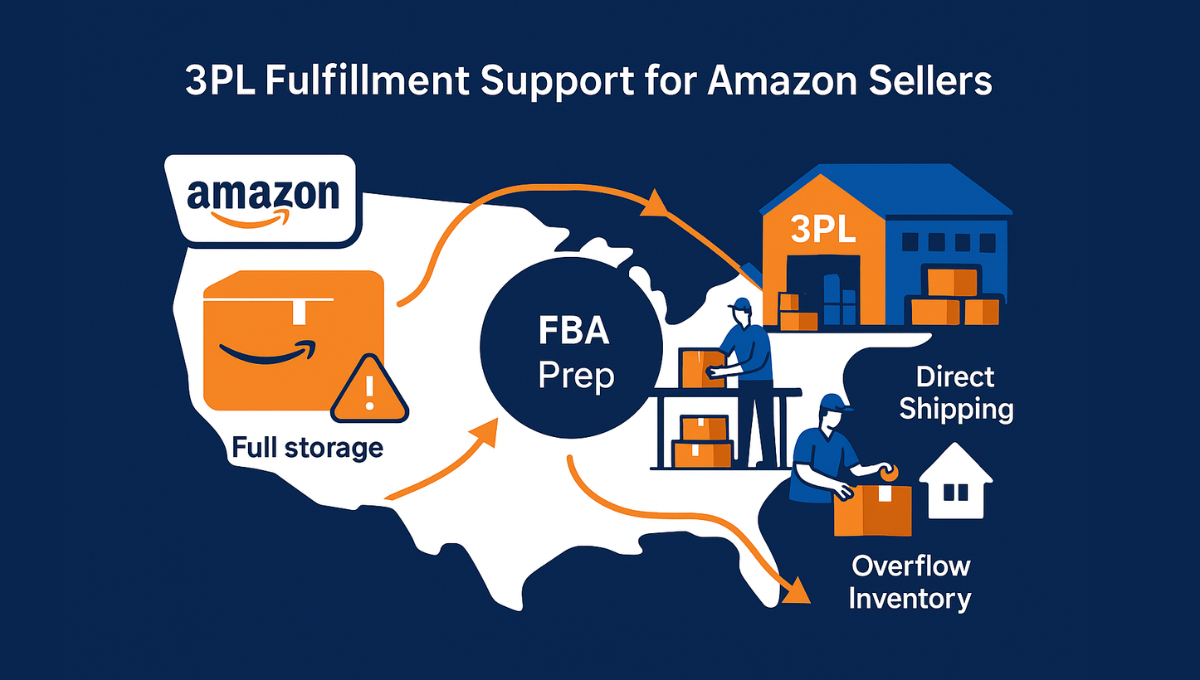
Amazon sellers have a special case: Fulfillment by Amazon (FBA) is Amazon’s own in-house 3PL. With FBA, Amazon stores your products and ships them via Prime. However, FBA isn’t always ideal. As a RitePrep guide notes, FBA “may not be right for everyone” due to high fees and rigid requirements. Many Amazon merchants instead supplement FBA with an external 3PL.
A 3rd party fulfillment Amazon provider can receive your goods, prep them (labeling, packaging) for FBA, and then ship them to Amazon’s centers. Or they can fulfill Amazon Seller-Fulfilled Prime orders directly from their warehouse. In short, a 3PL for Amazon handles both FBA prep and direct-to-customer shipping, giving sellers more flexibility.
Amazon 3rd party shipping (via a 3PL) also helps during peak seasons. For example, if your FBA storage is full, a 3PL like RitePrep will store overflow inventory and feed it to Amazon on demand. Many sellers find that the right 3PL “improves shipment accuracy, cost efficiency, and growth opportunities,” as Red Stag notes. Partnering with a 3PL can give Amazon merchants a competitive edge: RitePrep reports that 81% of shippers say using a 3PL improves customer service. In practice, this means faster delivery and fewer stockouts on Amazon listings.
Whether you use Amazon FBA, Seller-Fulfilled Prime, or both, a 3rd party logistics fulfillment provider can streamline the process. They integrate with Amazon’s system (or any e-commerce platform) so orders flow automatically. Choosing a specialized provider, like RitePrep Fulfillment, means you get tailored service: RitePrep’s Amazon-focused 3PL offers custom pricing and claims 100% order accuracy from U.S. warehouses. For small to mid-size FBA sellers, such personalized 3PL support can be invaluable.
Choosing a 3PL Provider
When evaluating 3rd party logistics fulfillment companies, consider these factors:
Services & Specialties
Ensure the 3PL handles your product type. Do you need climate-controlled storage, kitting, or special handling? For Amazon, check if they offer FBA prep (labeling, bundling) and Seller-fulfilled Prime support. Specialists like RitePrep excel in Amazon and CPG logistics.
Technology & Integration
A top 3PL provides robust 3rd party fulfillment software. Their WMS should sync with your online stores, giving real-time inventory and order tracking. Verify that their tech can integrate with Amazon Seller Central, Shopify, or other platforms you use. This ensures seamless order flow.
Location & Network
More warehouses mean wider coverage. Pick a provider with fulfillment centers near your customer base or major transit hubs. As we saw, distributed networks cut transit times. For U.S. brands, multiple U.S. centers cover 98% of U.S. addresses in 1–2 days (Rakuten’s ShipNetwork example). If you sell internationally, check if they have overseas warehouses too.
Cost Structure
Look for transparent, pay-as-you-go pricing. Understand all fees (storage, pick/pack, shipping). Compare quotes carefully. The best 3PLs clearly list their rates and require no hidden long-term contracts.
Reliability & Guarantees
Check the 3PL’s accuracy and timeliness records. Top providers guarantee high accuracy (often ~99%). Red Stag, for instance, offers a $50 credit for any mistakes. Ask about service-level agreements and their compensation policies for errors. Good customer support (a dedicated account manager) is also a must.
Reputation & Experience
Research reviews and case studies. A reputable 3rd party logistics fulfillment company will have positive feedback from brands like yours. They should be experienced in your industry (e.g. heavy goods, apparel, supplements, etc.).
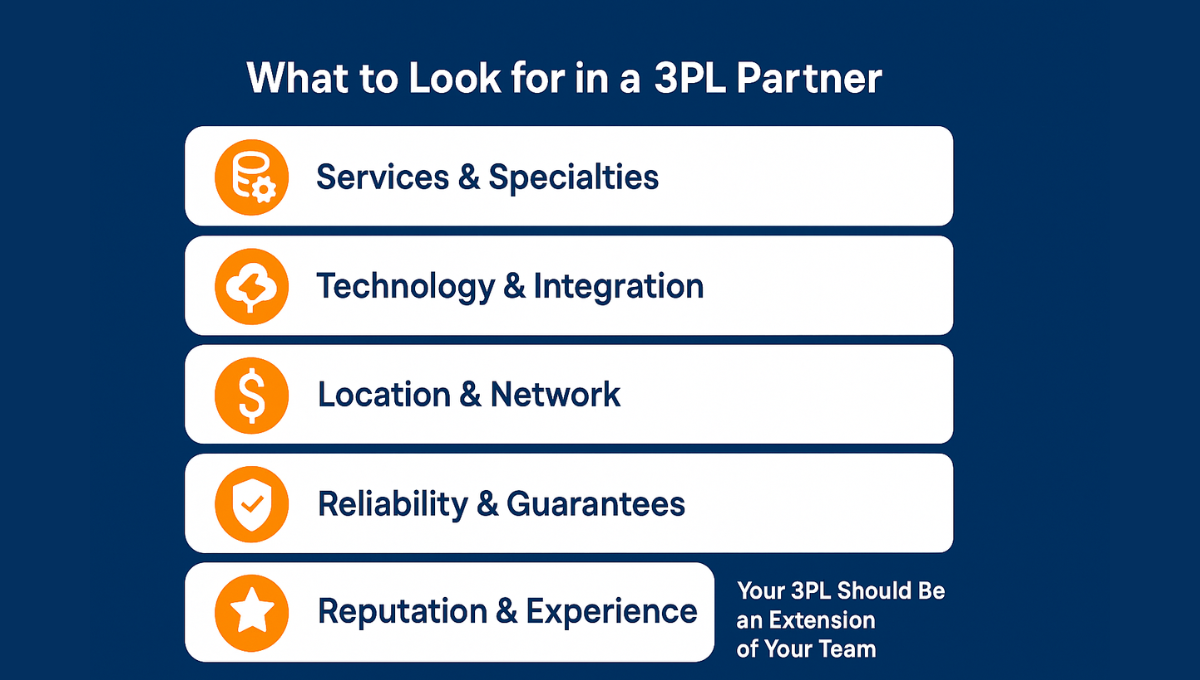
By weighing these factors, you can choose a 3rd party fulfillment provider that aligns with your needs. For more guidance, see RitePrep’s article [Top 3PLs for Amazon FBA Sellers] which discusses matching services to seller requirements. Ultimately, the goal is to partner with a 3PL that feels like an extension of your team – responsive, tech-savvy, and focused on your growth.
FAQs
What is third-party shipping?
Third-party shipping means letting an outside company handle the shipping of your orders. In other words, you outsource your delivery process to a third-party logistics (3PL) provider. They take your inventory, pack orders, and ship them to customers.
What is a third-party delivery?
Third party delivery generally refers to using an external delivery service for your shipments. It could mean contracting any carrier (UPS, DHL, etc.) or, more broadly, using a 3PL for the final delivery leg. In the 3PL model, “third party delivery” is simply the act of your chosen logistics partner arranging the last-mile courier to send packages to your customers.
Is Amazon a 3PL?
Amazon itself offers Fulfillment by Amazon (FBA), which acts like a 3PL for Amazon sellers. With FBA, Amazon stores your products and ships them, effectively functioning as your logistics partner. In that sense, Amazon is a 3PL for your products. However, Amazon is a marketplace/company, not a separate 3PL brand. Many sellers use external 3PLs in addition to or instead of FBA to gain more flexibility.
What is meant by 3rd party logistics?
3rd party logistics (3PL) means outsourcing various logistics tasks to an outside provider. These tasks include warehousing, inventory management, order fulfillment, shipping, and returns. As Amazon’s seller blog explains, 3PL involves “outsourcing of various order fulfillment processes” to an external company. Essentially, the 3PL acts as your logistics department.
What is 3PL shipping?
3PL shipping refers to shipping services provided by a third-party logistics company. In practice, it’s the shipping component of using a 3PL. Rather than you arranging shipments, the 3PL coordinates carriers and delivery for your orders. So 3PL shipping = letting a 3rd party logistics provider handle the transport of your goods.
Is DHL a third-party logistics?
Yes, DHL is one of the world’s largest 3PL companies. It offers outsourced logistics services like warehousing, freight forwarding, and distribution, exactly the services a 3PL provides. In other words, DHL both owns carriers and provides 3PL warehouse services, so it frequently acts as a third-party logistics provider for businesses of all sizes.